



Last night, the girls and I watched a very good and interesting movie. It was your typical teenage girl’s romance in many ways, but there was an unexpected twist (unless, like my girls, you read the book by Nicola Yoon) that has me thinking about parenting in today’s world. The movie, Everything, Everything, centers around Maddy, a seventeen-year-old girl who suffers from Severe Combined Immunodeficiency Disease, or SCID. Maddy cannot leave her house – ever. Any visitors, and there are practically none, must enter through a decontamination chamber and be sanitized, before being allowed into the house, and must keep their distance from Maddy. For seventeen years, Maddy contentedly lives life through books and movies, but all that changes when Olly moves in next door.
SPOILER ALERT
The story revolves around Maddy’s ever-increasing desire to experience life outside of her house. She longs to sit in the same room and have a real conversation with Olly, a compassionate seventeen-year-old boy whose father is abusive and can’t hold down a job, forcing the family to move every few months. Once Olly manages to convince Maddy’s nurse to let him in, being together is not enough for the two teens. The young couple wants to date, to experience the world together; and Maddy begins to ponder the age-old questions, what would you do for love, and would you risk your life to be happy? Once she decides that the answers are “everything” and “yes,” the story takes a turn that those unfamiliar with the book would never see coming.
WARNING – MAJOR PLOT TWIST REVEALED
What would you do for love? Would you risk someone else’s life to ensure your own happiness? As a mother, watching the revelation that Maddy’s mother had been lying for her child’s entire life, those questions had more meaning. A doctor, with a clear understanding of what her daughter would have to endure, Maddy’s mother lied to Maddy, and everyone else, from the time Maddy was a baby. After losing her husband and Maddy’s brother in a car accident, Dr. Whittier decided that the only way to never lose Maddy was to keep her locked inside their home forever. It’s truly the kind of stuff that fairy tales are made of. The mother locks the daughter in the castle until the young prince or knight or other charming male comes along and rescues the fair maiden. And as in most fairy tales, the viewer (or reader) is cheering for Maddy and Olly to break out and be free even though the truth about Maddy’s condition isn’t known until the end of the movie.
But what if we aren’t talking about a fairy tale? What if a parent spent a child’s entire life keeping the child locked inside as a way to protect her? Impossible? Not really. I look around today and see many parents doing just that. Sure, their kids are allowed to go outside and play and be with other kids or go to school, but where is mom? Often times, mom is right there beside them. At school, at the pool, at camp, and everywhere else. I see moms unable to let their children fall, make mistakes, get hurt, or fail. A child cries, and mom is right there to pick up the pieces, but what does that do to the child? Does she become a strong, independent person who can contribute to society, or a person who has no idea how to live in the real world, solve her own problems, and find her own place where she can truly be the person God intended?
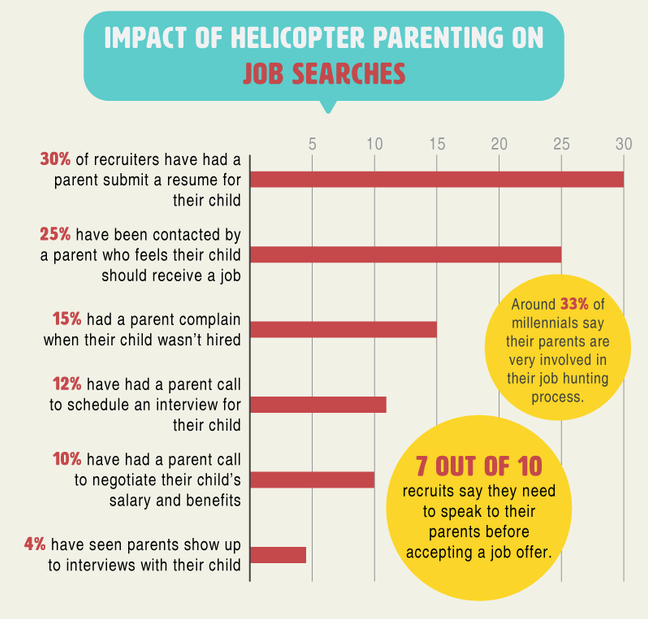
A recent study revealed that “95% of college counseling centers across the nation reported that they are concerned with the growing amount of psychological issues that they are seeing students enter college with, due to helicopter parenting.” According to the article, young adults today have a higher rate of suicide, a higher dependence on prescription drugs as well as recreational drugs, and a harder time taking control of their adult lives. Take a look at this graphic and tell me if you think there may be a correlation between the amount of young people unable to get a job and the rise in helicopter parenting.

Am I a perfect mom? No way. Every day I make mistakes. Every day I am learning. Every day I am trying to find where I fit into the ever-changing lives of my daughters. Every day I want to be better than I am. Every day I wonder what I’m doing right and what I’m doing wrong. And I try to fix what I’m doing wrong, not what they’re doing wrong. And that’s where I feel we have to draw the line. Because in truth, our children are yearning to be free, to be their own persons, to be successful, to have their own lives, and even make their own mistakes. By hovering over them at all times, not allowing them to make their own decisions and their own mistakes, and insisting that they always be within our sights, we are holding them back – plain and simple.
Interestingly, a sign that you’re a helicopter parent is the amount of time you talk to your adult child. Millennials talk to their parents 8.8 times per week, with 86% of first-year college females communicating frequently with their mothers. This is where I have to disagree with the professionals. I talk to my mother every single day. And I have some form of conversation with my grown daughter every day. Sure, I give her advice, but I try to do so only when she asks. And only after I ask her how she thinks she should handle it. I’m not always good at that, but I do try. I hope that, rather than solving problems for my children, I have and do instill in them the ability to solve problems for themselves. It’s not always easy seeing the distinction, but it’s imperative. Have I overstepped? Sure, I have. But I hope that my mistakes have been lessons for my girls as well as for me.

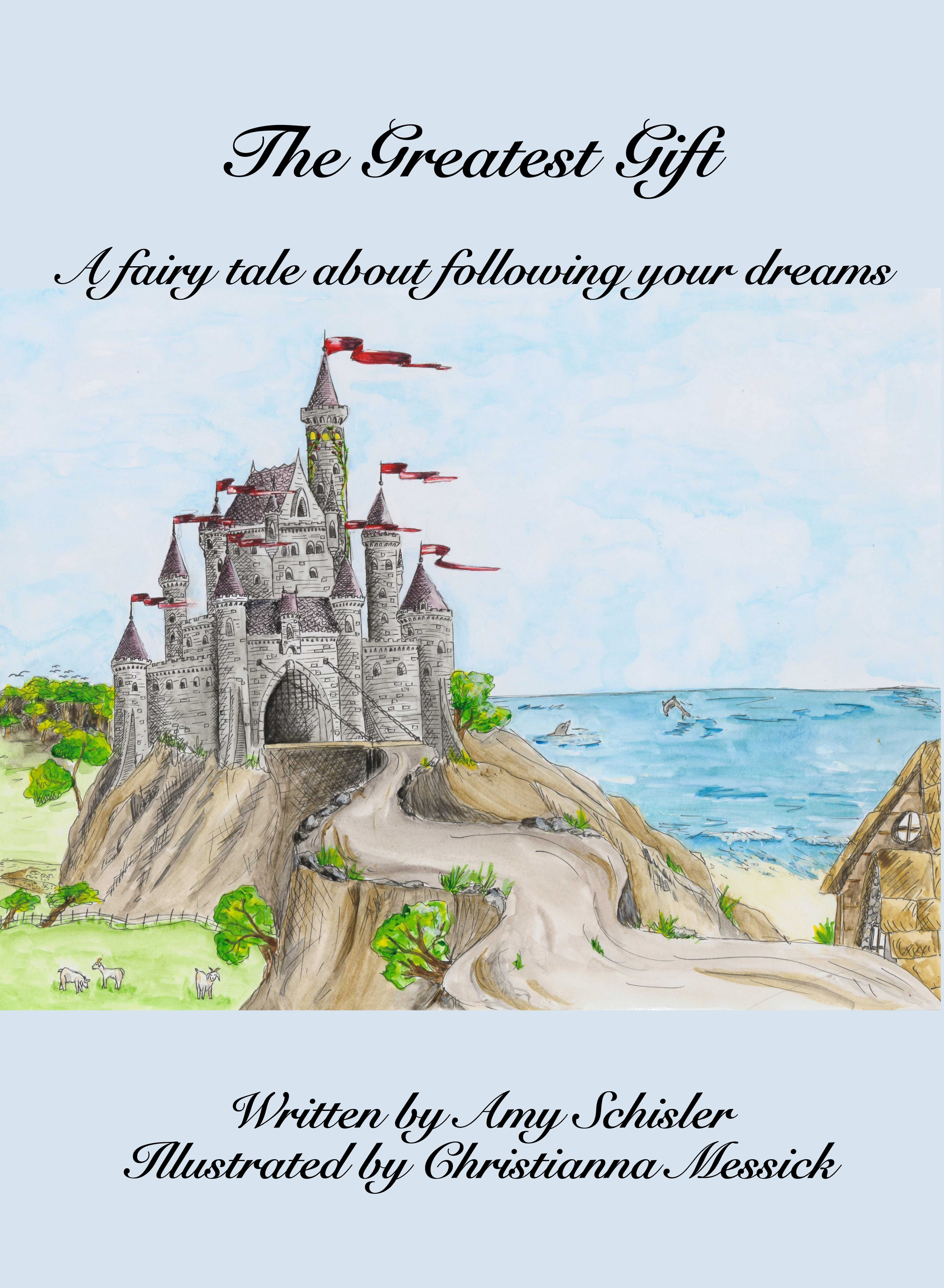
This fall, I will be releasing my next children’s book, The Greatest Gift. Ironically, it’s about a king and queen who lock their daughter in a tower in order to protect her from the world. While it is a young man who eventually takes her from the castle, it is the princess who ultimately decides when, how, and with whom she will leave. Like Maddy, she is able to break free from the prison imposed upon her by her parents. Will other young adults today be able to do the same?
What I was writing about one year ago this week: Seeking the Silver Lining.
Amy Schisler is an award winning author of both children’s books and novels for readers of all ages. She lives with her husband and three daughters on the Eastern Shore of Maryland. Her books, Picture Me and Whispering Vines, are recipients of Illumination Awards, placing them among the top three inspirational fiction books of 2015 and 2016. Whispering Vines was awarded the 2017 LYRA Award for the best romance of 2016. Amy’s most recent novel, Island of Miracles, is now on sale.
You may follow Amy on Facebook at http://facebook.com/amyschislerauthor, Twitter @AmySchislerAuth, Goodreads at https://www.goodreads.com/amyschislerand at https://amyschislerauthor.com.
Amy’s books: Crabbing With Granddad (2013), A Place to Call Home (2014), Picture Me (2015), Whispering Vines (2016), Island of Miracles (2017), Stations of the Cross Meditations for Moms (2017)